Table of Contents
- The Functional Importance of Material Choice
- 1. uPVC Gutters: Lightweight and Practical
- 2. Aluminium Gutters: Durable and Modern
- 3. Cast Iron Gutters: Authentic Heritage Strength
- 4. Environmental Lifecycle and Material Sustainability
- 5. Acoustic Insulation and Rainfall Noise Dampening
- 6. Fascia Bracket Spacing and Structural Weight Distribution
- Summary of Suitability
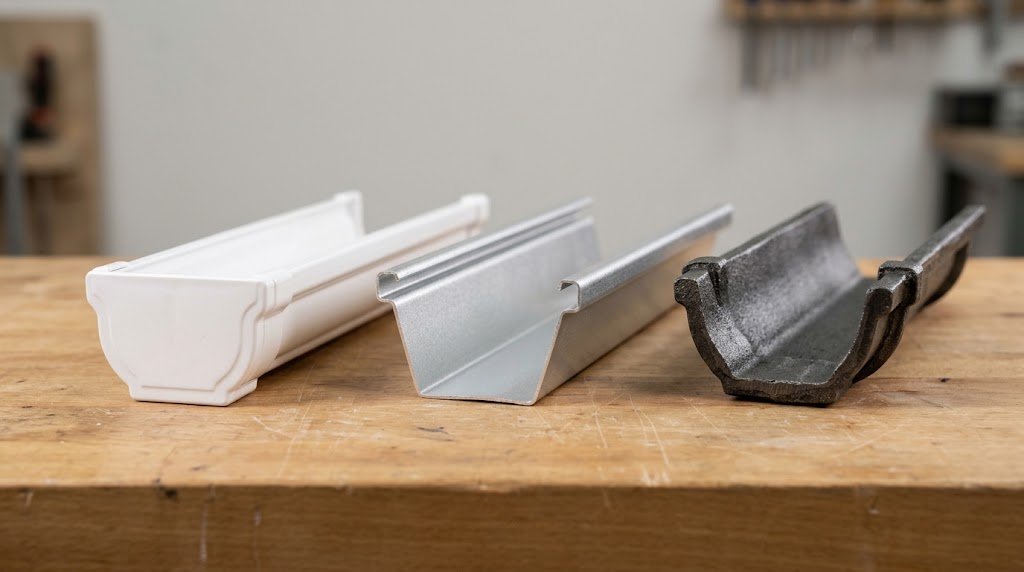
Selecting the appropriate rainwater guttering for a residential property involves balancing durability, architectural style, maintenance requirements, and structural suitability. The three predominant materials specified across the UK—uPVC, aluminium, and cast iron—each present distinct physical properties, aesthetic benefits, and long-term care considerations.
The Functional Importance of Material Choice
Gutters endure continuous exposure to outdoor weathering, ultraviolet radiation, seasonal thermal shocks, and heavy storm volumes. Adhering to standards set out in British Standard BS EN 12056-3 ensures that whichever material is chosen, the rainwater system is sized and installed to prevent water backing up into eaves and wall cavities.
1. uPVC Gutters: Lightweight and Practical
Unplasticised Polyvinyl Chloride (uPVC) is the most widely installed domestic guttering material across modern UK housing developments. It is entirely impervious to water corrosion, rot, and rust.
Key Performance Attributes:
- Corrosion Resistance: uPVC cannot rust or oxidise, making it resilient against atmospheric pollution and coastal sea air.
- Weight and Handling: Extremely lightweight, placing minimal dead load on timber fascia boards and simplifying handling during installation.
- Thermal Movement: uPVC expands and contracts significantly as seasonal temperatures shift. Correct installation must incorporate dedicated expansion gaps within union fittings to avoid buckled channels or popped clips.
- Aesthetics: Available in standard half-round, square-line, and deep-flow profiles in colours such as black, white, grey, and brown. Over extended decades, intense sun exposure can cause minor surface fading.
2. Aluminium Gutters: Durable and Modern
Aluminium has become an increasingly popular specification for both contemporary architectural builds and period renovations seeking longevity without the heavy dead weight of cast iron.
Key Performance Attributes:
- Long-Term Durability: Naturally forms an inert protective oxide layer when exposed to air, preventing structural degradation. Factory polyester powder coatings provide exceptional longevity against weathering.
- Strength-to-Weight Ratio: Substantially stronger than uPVC while weighing approximately one-third of equivalent cast iron runs.
- Joint Integrity: Available in sectional lengths or continuous seamless extruded runs formed on-site, drastically reducing the number of joint seals vulnerable to leaking.
- Aesthetics: Manufactured in traditional Ogee and deep-flow styles that closely match historical heritage profiles while offering crisp, modern lines for architect-designed builds.
3. Cast Iron Gutters: Authentic Heritage Strength
Cast iron represents the traditional standard found across Victorian, Edwardian, and Georgian properties. It offers irreplaceable historical authenticity and unmatched structural solidity.
Key Performance Attributes:
- Unmatched Solidity: Highly impact-resistant, capable of withstanding heavy snow loadings, severe wind shear, and ladder access without flexing or warping.
- Acoustic Performance: The heavy density of cast iron dampens rainwater noise significantly, preventing hollow dripping sounds often heard in thin-walled plastic gutters.
- Maintenance Commitment: Requires diligent maintenance. Cast iron must be primed and finished with high-quality exterior gloss paints, with periodic repainting every 5 to 10 years to prevent surface rust and joint bolt corrosion.
- Fascia Load: Substantially heavier than alternative materials, requiring robust, healthy timber fascias and heavy-duty drive-in or screw-fixed brackets spaced at strict structural intervals.
4. Environmental Lifecycle and Material Sustainability
Sustainability and embodied energy increasingly influence building material decisions across the UK. Cast iron and aluminium boast outstanding recyclability credentials: both metals can be melted down and re-engineered repeatedly without degrading their material properties or structural integrity.
Conversely, while modern uPVC is recyclable through specialised industrial channels, standard domestic demolition often results in plastic waste entering landfills. Furthermore, the longevity of metal gutters means that over a 60- to 100-year building lifecycle, aluminium and cast iron installations produce fewer aggregate replacements, offsetting initial resource extraction impacts.
5. Acoustic Insulation and Rainfall Noise Dampening
An often overlooked factor when selecting gutter materials is sound transmission. Thin-walled plastic gutters resonate noticeably when heavy rain droplets strike the channel base, occasionally causing annoying repetitive hollow dripping sounds outside bedroom windows.
Cast iron and thick-gauge extruded aluminium absorb kinetic raindrop impact effectively due to their high material mass and acoustic dampening properties. For bedrooms positioned directly beneath low-pitch dormer roofs or eaves, dense metal rainwater systems provide a noticeably quieter acoustic environment during intense UK downpours.
6. Fascia Bracket Spacing and Structural Weight Distribution
Each gutter material exhibits specific mechanical stiffness, directly dictating how closely fascia brackets must be spaced along the eaves. British Standard BS EN 12056-3 mandates that cast iron systems—owing to their substantial dead load of up to 10 to 15 kilograms per metre—require heavy-duty support brackets spaced at intervals no greater than 600mm to 900mm.
In contrast, rigid aluminium profiles can comfortably span 900mm to 1,200mm between fixings, while lightweight uPVC profiles are typically supported at 800mm to 1,000mm intervals. Failing to observe appropriate bracket spacing causes channels to bow when filled with water or wet snow, stressing screw fixings and promoting joint separation.
Safety Notice: Gutter Replacement and Work at Height
Replacing rainwater channels—particularly heavy materials such as cast iron and sectional metal—involves significant weight handling at eaves level. Homeowners should never attempt DIY gutter installations from household stepladders. Working at height mandates certified scaffolding, podium steps, or mobile access towers in accordance with HSE guidelines to protect against life-changing falls.
Summary of Suitability
For standard suburban homes seeking a functional, zero-painting solution, uPVC remains an effective and functional choice. For property owners seeking extended lifespan, superior joint integrity, and clean architectural finishes, aluminium provides an outstanding long-term balance. For heritage and period properties where original detailing must be preserved, authentic cast iron remains unmatched. Further guidance on planning considerations for external alterations is available at the official Planning Portal.
Sources & Regulatory References
BS EN 12056-3:2000 Gravity drainage systems inside buildings - Roof drainage
Metal Gutter Manufacturers Association (MGMA): Technical Specifications Guide
Planning Portal: Rainwater goods and heritage building advice
Frequently Asked Questions
Discuss Your Building or Roofing Project
AKF Builders is based on Clapham High Street, providing building works, new roofs, roof repairs, and guttering across Clapham, Wandsworth, Battersea, and Balham.
Related Guides
Signs your gutters need replacing
Learn how to identify key warning signs that your property’s gutters have reached the...
Read guide →
What to do when your roof leaks
A practical step-by-step emergency checklist for UK homeowners experiencing an active...
Read guide →
Common causes of roof leaks in older terraced houses
A guide for owners of Victorian and Edwardian terraced properties exploring common ca...
Read guide →