Table of Contents
- The Value of Pre-Contract Due Diligence
- 1. What Insurance Policies Do You Hold and Can You Provide Certificates?
- 2. Will You Provide a Comprehensive Written Specification?
- 3. What Guarantees and Warranties Are Provided?
- 4. How Will Site Health and Safety Be Managed?
- 5. How Is Waste Disposal and Site Cleanliness Handled?
- 6. Who Will Supervise the Project on a Daily Basis?
- 7. What Trade Accreditations and Statutory Competencies Do You Hold?
- 8. How Are Building Regulations and Approvals Addressed?
- Recognising Red Flags
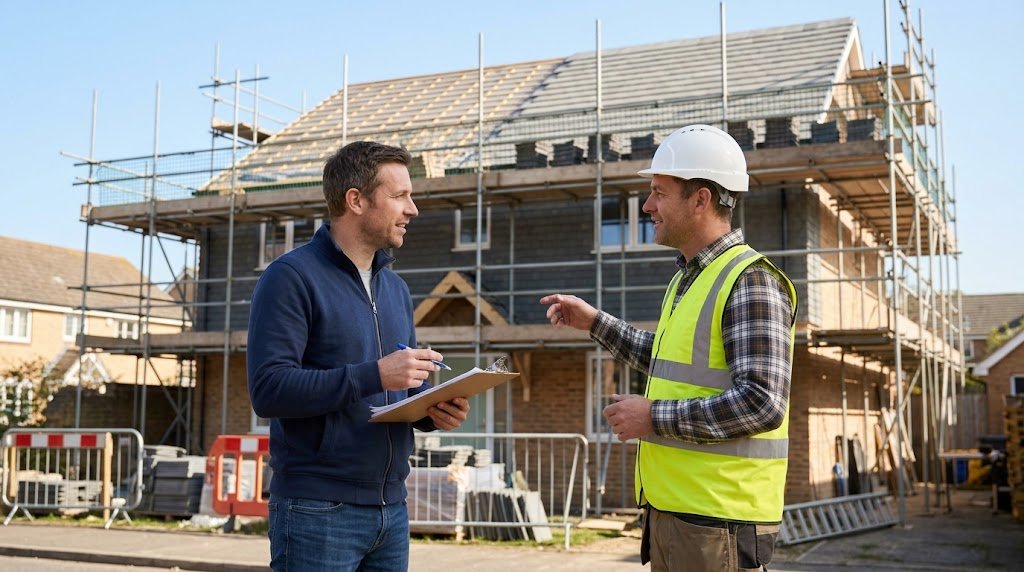
Commissioning building or roofing work on your property represents a significant investment in your home’s security, comfort, and market value. Asking targeted, professional due diligence questions before signing an agreement ensures you engage a capable, insured, and reputable contractor who adheres to UK statutory standards and workplace health and safety rules.
The Value of Pre-Contract Due Diligence
Selecting a contractor should never rely solely on verbal discussions or informal promises. Clear communication and written specifications establish mutual expectations from day one, in accordance with guidance from Citizens Advice and statutory consumer rights under the Consumer Rights Act 2015.
1. What Insurance Policies Do You Hold and Can You Provide Certificates?
Never permit any contractor to commence physical work on your property without verifying their insurance coverage. You should specifically ask to see current certificates for:
- Public Liability Insurance: Protects against accidental damage to your home, neighbouring properties, or injury to members of the public during construction. Adequate cover typically starts at £2,000,000 to £5,000,000.
- Employer’s Liability Insurance: Mandatory if the contractor employs labourers or tradespeople on-site.
- Working at Height Endorsement: For roofing contractors, confirm that their policy does not contain restrictive height exclusions that void coverage on multi-storey properties.
2. Will You Provide a Comprehensive Written Specification?
A reputable contractor should always provide a detailed, itemised written proposal rather than a single vague figure. Ask:
- Does the document specify the exact materials, brands, dimensions, and installation methods to be used?
- Are preliminary items—such as scaffolding erection, pavement licences, and debris skip hire—clearly accounted for?
- How are unforeseen structural defects or required variations handled and priced?
3. What Guarantees and Warranties Are Provided?
Understanding the distinction between different types of construction warranties protects your investment over the long term. Inquire:
- Workmanship Guarantee: What period does the contractor guarantee their physical installation against defects?
- Manufacturer Warranties: Do roofing membranes, slate coverings, or gutter components carry separate manufacturer performance guarantees?
- Insurance-Backed Guarantees (IBGs): Does the contractor offer an independent insurance-backed guarantee that remains valid even if the contracting firm ceases trading in the future?
4. How Will Site Health and Safety Be Managed?
Domestic construction projects are subject to UK statutory safety legislation under the Construction (Design and Management) Regulations 2015 (CDM 2015). Ask prospective contractors:
- What safety access equipment (scaffolding, guard rails, edge protection) will be deployed for working at height?
- How will daily access, materials storage, and pedestrian walkways be kept secure?
- Are trade operatives certified and trained in safe manual handling and tool operation?
5. How Is Waste Disposal and Site Cleanliness Handled?
Building alterations and roof strip-downs generate substantial volumes of rubble, timber, and masonry. Ask:
- Is the contractor a registered Upper Tier Waste Carrier with the Environment Agency? Property owners have a legal Duty of Care under environmental regulations to ensure waste is not fly-tipped.
- Will an on-site skip or dedicated wait-and-load service be utilized?
- Are arrangements in place for end-of-day site sweeps and magnetic clearing of stray nails on driveways?
6. Who Will Supervise the Project on a Daily Basis?
Understanding who will be physically present on-site is essential for smooth communication. Ask whether the business owner, a designated site foreman, or subcontractors will carry out the primary trades. Establish clear communication channels for daily progress updates and queries.
7. What Trade Accreditations and Statutory Competencies Do You Hold?
Verifying a contractor’s formal accreditations offers reassurance regarding their technical competence and business stability. Ask whether the builder or roofer is registered with recognised industry bodies such as TrustMark (the Government-endorsed quality scheme), the Federation of Master Builders (FMB), or the National Federation of Roofing Contractors (NFRC).
Furthermore, ensure that any specialist trades—such as gas engineers connecting boilers or electricians rewiring extensions—hold mandatory statutory credentials under Gas Safe and Part P Competent Person Schemes. Employing accredited contractors ensures work is certified properly, preventing costly delays during future property conveyancing.
8. How Are Building Regulations and Approvals Addressed?
Certain building and roofing works—such as structural wall removals, chimney breast alterations, roof replacements covering over 25% of the pitch, or drainage modifications—require formal statutory sign-off under UK Building Regulations. Clarify in writing whether the contractor is registered under a recognised Competent Person Scheme or if formal building notice applications must be submitted to the local authority building control department via the Planning Portal.
Homeowner Safety Reminder
During ongoing building or roofing work, respect physical site perimeters. Never enter active work zones, climb scaffolding ladders, or inspect roofs unassisted while contractors are working or after hours. Building sites contain active hazards including falling objects, unstable surfaces, and heavy tools.
Recognising Red Flags
Exercise caution if a contractor demands full cash payment upfront, refuses to provide an official written quote on headed paper, lacks a verifiable trading address, or discourages you from seeking statutory building control approval. Thorough pre-contract due diligence protects your property and ensures high-standard project delivery.
Sources & Regulatory References
Citizens Advice: Finding a trustworthy trader and checking qualifications
Health and Safety Executive (HSE): Managing health and safety in construction (HSG150)
Planning Portal: Building regulations and statutory approvals overview
Frequently Asked Questions
Discuss Your Building or Roofing Project
AKF Builders is based on Clapham High Street, providing building works, new roofs, roof repairs, and guttering across Clapham, Wandsworth, Battersea, and Balham.
Related Guides
How to prepare your home for building work
A guide for property owners on preparing living spaces for domestic building alterati...
Read guide →
Signs your gutters need replacing
Learn how to identify key warning signs that your property’s gutters have reached the...
Read guide →
What to do when your roof leaks
A practical step-by-step emergency checklist for UK homeowners experiencing an active...
Read guide →