Table of Contents
- The Value of Pre-Construction Preparation
- 1. Clearing and Protecting the Work Zone
- 2. Advanced Dust Containment Strategies
- 3. Establishing Clear Site Access and Deliveries
- 4. Arranging Highway Skip Permits and Road Safety
- 5. Temporary Living and Daily Routine Arrangements
- 5. Neighbour Courtesy and Statutory Party Wall Notices
- 6. Managing Utilities and Essential Services
- 7. Agreeing Site Working Hours and Noise Protocols
- Summary Checklist Before Day One
Properly preparing your home before building works begin significantly reduces disruption, safeguards personal belongings against airborne dust and accidental damage, and establishes smooth working conditions for tradespeople. Taking proactive steps to clear work areas, protect flooring, notify neighbours, and confirm utility isolations ensures your project proceeds efficiently from day one.
The Value of Pre-Construction Preparation
Residential renovations and alterations inevitably involve noise, vibration, dust, and trade traffic. Planning ahead mitigates stress and ensures compliance with safe domestic construction practices outlined by the Health and Safety Executive (HSE).
1. Clearing and Protecting the Work Zone
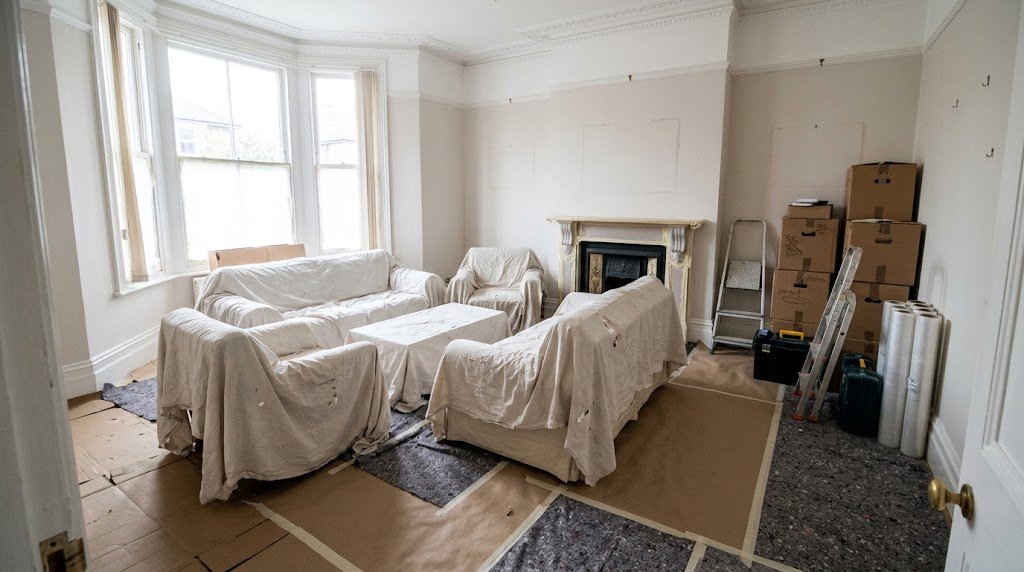
Clear all personal belongings completely out of the rooms scheduled for alteration:
- Remove Furniture: Empty the space entirely. Even items pushed into corners can obstruct trade movement or suffer accidental impact.
- Protect Fixtures: If fitted wardrobes or kitchen units remain in the zone, seal them with heavy-duty plastic sheeting and low-tack masking tape.
- Safeguard Hanging Items: Vibrations from demolition, drilling, and structural knocking will travel through shared walls. Remove artwork, mirrors, clocks, and fragile ornaments from adjacent rooms and opposing walls.
2. Advanced Dust Containment Strategies
Construction dust—especially from plaster removal, masonry cutting, and sanding—is exceptionally fine and penetrates throughout a house if unmanaged:
- Install heavy-duty plastic zipper dust doors over doorways connecting the work area to the rest of the living space.
- Seal heating and ventilation ducts in the work zone to prevent dust circulating via air currents.
- Protect carpeted transit routes and hallways with self-adhesive plastic carpet protection film, and lay heavy-duty hardboard or Correx sheets over timber or tiled floors.
3. Establishing Clear Site Access and Deliveries
Tradespeople require safe, unobstructed pathways to move tools, materials, and heavy debris. Ensure:
- Pathways from the front boundary or driveway to the work zone are clear of plant pots, bicycles, and garden furniture.
- Dedicated parking spaces or driveway areas are reserved for trade vans and delivery vehicles.
- If a skip is required and cannot fit on private land, ensure a local council skip licence and parking bay suspension have been secured in advance.
4. Arranging Highway Skip Permits and Road Safety
When domestic building works require a commercial skip or bulk material deliveries, positioning them safely is essential. If a skip cannot be accommodated entirely within your private driveway, it must be sited on the public highway, which legally requires an official skip permit from the local highway authority.
Highway regulations mandate that road-sited skips must be fitted with reflective markings, illuminated with yellow flashing hazard lights during hours of darkness, and accompanied by traffic safety cones. In areas with controlled parking zones (CPZs), property owners or contractors must also apply for parking bay suspensions in advance to prevent fines or towing delays.
5. Temporary Living and Daily Routine Arrangements
If building works involve ground-floor extensions, structural wall removals, or kitchen alterations, normal domestic routines will be interrupted for several weeks. Establish a functional temporary utility area in an unaffected room:
- Relocate a microwave, kettle, toaster, and mini-fridge into a living room or spare bedroom to maintain basic food preparation.
- Plan laundry routines or arrange access to local laundrettes while main plumbing lines are undergoing reconfiguration.
- Designate a safe, clean sanctuary room where family members can relax away from the daily noise and dust of the construction zone.
5. Neighbour Courtesy and Statutory Party Wall Notices
Maintaining positive communication with adjacent property owners prevents misunderstandings and disputes:
- Inform your immediate neighbours well in advance regarding anticipated start dates, working hours, and skip deliveries.
- The Party Wall Act: If your project involves building on or near a boundary, cutting into a shared party wall, or excavating within three to six metres of an adjacent structure, you must formally comply with the Party Wall etc. Act 1996 by serving statutory notices at least one to two months before works begin.
6. Managing Utilities and Essential Services
Locate and test your primary utility shut-off points before construction begins:
- Main Water Stopcock: Verify that it turns smoothly so water can be isolated quickly in an emergency.
- Electrical Consumer Unit: Ensure circuits are clearly labelled and accessible.
- Gas Meter: Know the location of the emergency control valve.
7. Agreeing Site Working Hours and Noise Protocols
UK local authorities enforce statutory restrictions on construction noise under the Control of Pollution Act 1974. Standard permitted hours for noisy domestic building operations are typically 08:00 to 18:00 Monday to Friday, and 08:00 to 13:00 on Saturdays, with no noisy operations permitted on Sundays or public Bank Holidays. Agreeing these operational boundaries with your builder beforehand keeps relationships with neighbours cordial and avoids council noise abatement intervention.
Home Health and Safety During Construction
While construction is active, treat the designated area as a regulated work site. Ensure young children and domestic pets are kept strictly away from the work zone, tools, electrical cables, and materials. Never enter scaffold structures or work platforms erected around the exterior of the house.
Summary Checklist Before Day One
Confirming your written contract, verifying planning permissions on the Planning Portal, clearing work areas, and sealing adjacent living spaces ensures that your building alterations commence safely and smoothly.
Sources & Regulatory References
Health and Safety Executive (HSE): Health and safety in construction (HSG150)
HM Government: The Party Wall etc. Act 1996 Explanatory Booklet
Planning Portal: Preparing for building works and permitted development
Frequently Asked Questions
Discuss Your Building or Roofing Project
AKF Builders is based on Clapham High Street, providing building works, new roofs, roof repairs, and guttering across Clapham, Wandsworth, Battersea, and Balham.
Related Guides

Questions to ask before hiring a builder or roofer
A guide for property owners outlining vital due diligence questions to ask building a...
Read guide →
Signs your gutters need replacing
Learn how to identify key warning signs that your property’s gutters have reached the...
Read guide →
What to do when your roof leaks
A practical step-by-step emergency checklist for UK homeowners experiencing an active...
Read guide →