Table of Contents
- The Purpose of Routine Gutter Maintenance
- Recommended Seasonal Cleaning Schedule
- 1. Safe Ground-Based Clearance Methods
- 2. Inspecting Downpipe Swan Necks and Outlets
- 3. Managing Roof Moss to Protect Guttering
- 4. Winter Freeze Precautions and Ice Dam Mitigation
- 5. Inspecting Gutter Joint Clips and Fascia Bracket Integrity
- 6. Checking for Leaks and Standing Water
- Summary of Good Practice
Maintaining clear, unobstructed rainwater gutters is essential for protecting external brickwork, foundations, and timber eaves from damp penetration. However, gutter maintenance must always be approached with strict safety discipline: homeowners should prioritise ground-based tools and avoid dangerous ladder work, leaving high-level clearance to trained, insured professionals.
The Purpose of Routine Gutter Maintenance
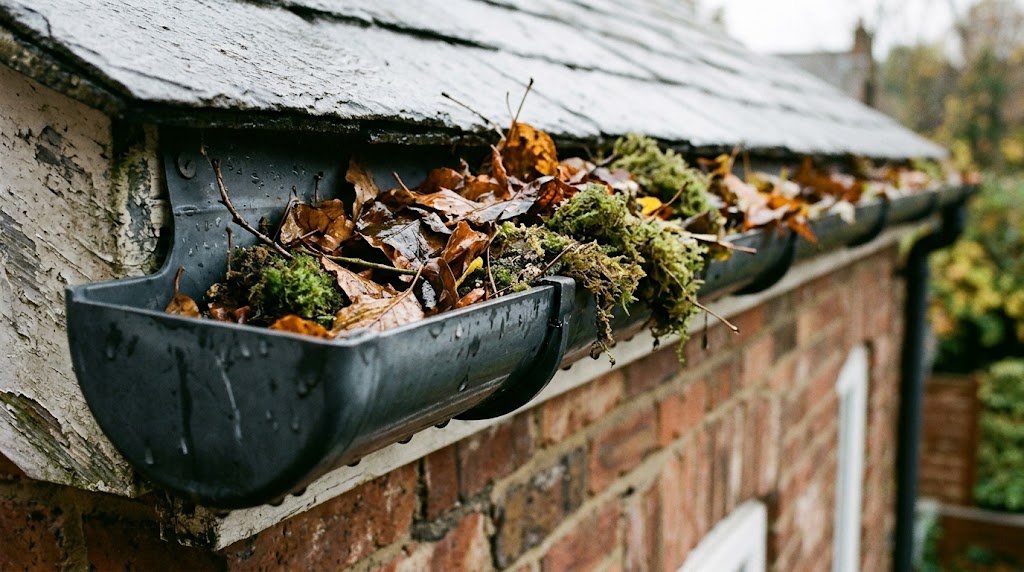
Gutters perform continuous, heavy drainage work during the UK’s frequent rainstorms. When fallen autumn foliage, twigs, and roof moss accumulate in gutter troughs, rainwater pools, overflows over the fascia lip, and runs directly down exterior walls. Complying with rainwater disposal principles in Approved Document H requires unobstructed channels that drain cleanly to ground gullies.
Recommended Seasonal Cleaning Schedule
Establishing a predictable maintenance routine prevents emergency overflows during winter freezes:
- Late Autumn (November/December): The most vital clean of the year. Undertaken once surrounding deciduous trees have shed their leaves to ensure channels remain clear of sodden organic debris before winter freezes.
- Late Spring (April/May): Removes residual winter debris, windblown blossom, seeds, and moss dislodged from roof tiles by spring rains.
1. Safe Ground-Based Clearance Methods
Advancements in domestic maintenance equipment have made it possible to clear gutters without ever stepping off the ground:
- Telescopic Gutter Vacuums: High-reach carbon fibre suction poles fitted with curved nozzles connect to wet-and-dry vacuum units, lifting leaves and sludge cleanly out of the channel from ground level.
- Gutter Cleaning Wands: Curved pole attachments fitted to garden hoses or pressure washers can flush light silt towards the downpipe outlet from the safety of the lawn.
- Inspection Cameras: Wireless mini-cameras or smartphone brackets mounted on telescoping poles allow property owners to visually verify that channels are clear without climbing.
2. Inspecting Downpipe Swan Necks and Outlets
A gutter run can be completely clear of leaves, but if the running outlet leading into the vertical downpipe is clogged, the entire system will fail. The curved "swan neck" bend where the downpipe bridges the soffit overhang is especially prone to trapping twigs and moss.
Installing wire balloon grates or perforated leaf guards over the outlet aperture prevents large debris from descending into the downpipe. At ground level, inspect shoe outlets and surface drain gullies, clearing away leaf litter to ensure discharged rainwater enters the surface water drainage network unimpeded.
3. Managing Roof Moss to Protect Guttering
A significant percentage of gutter debris originates on the roof itself. Damp UK winters encourage thick moss carpets across roof slates and tiles. When moss dries in summer and is struck by autumn rain, heavy clumps wash down directly into the gutter channel.
Gently brushing or treating roof moss prevents continuous gutter choking. However, moss removal must strictly be performed by professionals with appropriate roof staging—never by an untrained homeowner scrambling across wet tiles.
4. Winter Freeze Precautions and Ice Dam Mitigation
When gutters are filled with standing water and decomposing wet leaves during freezing UK winter spells, the trapped water solidifies into heavy blocks of ice. Water expands by roughly 9% upon freezing, generating immense outward pressure that splits uPVC seam unions, cracks cast iron joints, and pulls fascia brackets out of timber boards.
Ensuring gutters are cleared in November before the onset of sub-zero temperatures prevents ice accumulation and protects eaves woodwork from bearing hundreds of kilograms of frozen weight.
Vital Safety Mandate: The Extreme Dangers of Domestic Ladders
According to the Royal Society for the Prevention of Accidents (HSE Ladder Safety Guidance INDG455), thousands of homeowners suffer life-changing injuries every year falling from domestic ladders while clearing gutters. Working near eaves requires one hand to maintain balance, leaving only one hand to scoop heavy sludge—a primary recipe for losing footing. Never overreach, never stand on the top rungs, and never lean ladders against plastic gutters that can buckle under weight. If you do not possess ground-based vacuum tools, commission a certified, fully insured contractor equipped with proper access systems.
5. Inspecting Gutter Joint Clips and Fascia Bracket Integrity
While clearing organic buildup, take time to observe the physical condition of the channel supports. Over years of thermal cycling, plastic gutter unions experience significant stress. The retaining retaining clips that clamp down on rubber gaskets can become brittle and snap, allowing the joint seal to loosen and leak during subsequent storms.
Similarly, inspect the fixing screws holding gutter brackets into the wooden or uPVC fascia board. If heavy accumulations of wet leaves or ice have pulled brackets forward, screws will pull loose from softened timber. Identifying loose brackets early enables simple re-securing before an entire section detaches under storm water load.
6. Checking for Leaks and Standing Water
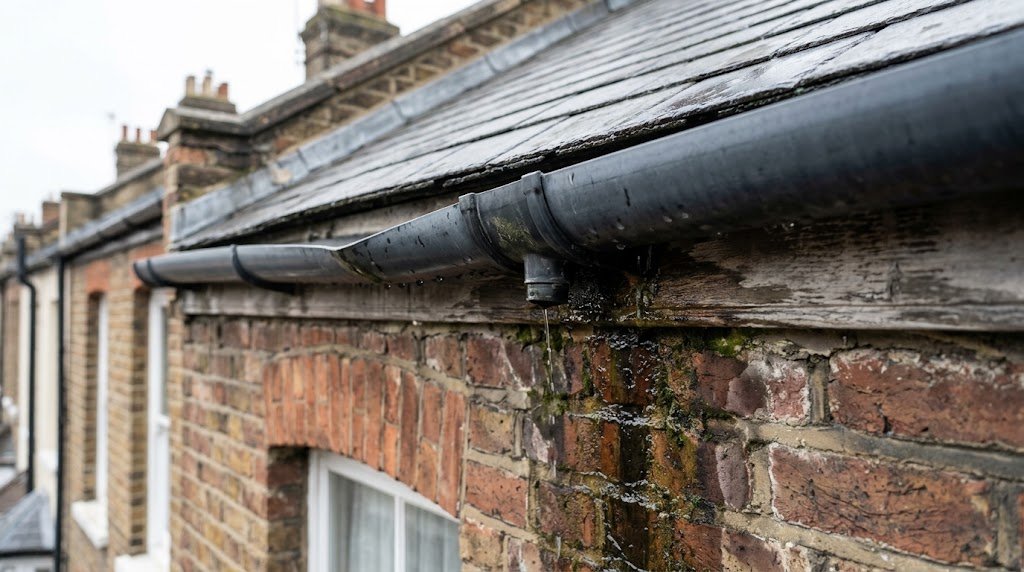
After rainfall, take a brief walk around your property with binoculars. If you notice water trickling from a seam hours after rainfall has ceased, or if birds are regularly bathing in a specific gutter section, standing water is present. This indicates an improper slope or a sagging bracket that requires professional realignment.
Summary of Good Practice
Regular visual checks from the ground, scheduled autumn and spring clear-outs, and immediate attention to dripping joints will ensure your rainwater drainage operates reliably for decades. For general guidance on permitted development and property alterations, visit the Planning Portal.
Sources & Regulatory References
Health and Safety Executive (HSE): Safe use of ladders and stepladders (INDG455)
Royal Society for the Prevention of Accidents (RoSPA): Home Ladder Safety
HM Government Approved Document H: Drainage and Waste Disposal
Frequently Asked Questions
Discuss Your Building or Roofing Project
AKF Builders is based on Clapham High Street, providing building works, new roofs, roof repairs, and guttering across Clapham, Wandsworth, Battersea, and Balham.
Related Guides
Signs your gutters need replacing
Learn how to identify key warning signs that your property’s gutters have reached the...
Read guide →
What to do when your roof leaks
A practical step-by-step emergency checklist for UK homeowners experiencing an active...
Read guide →
Common causes of roof leaks in older terraced houses
A guide for owners of Victorian and Edwardian terraced properties exploring common ca...
Read guide →